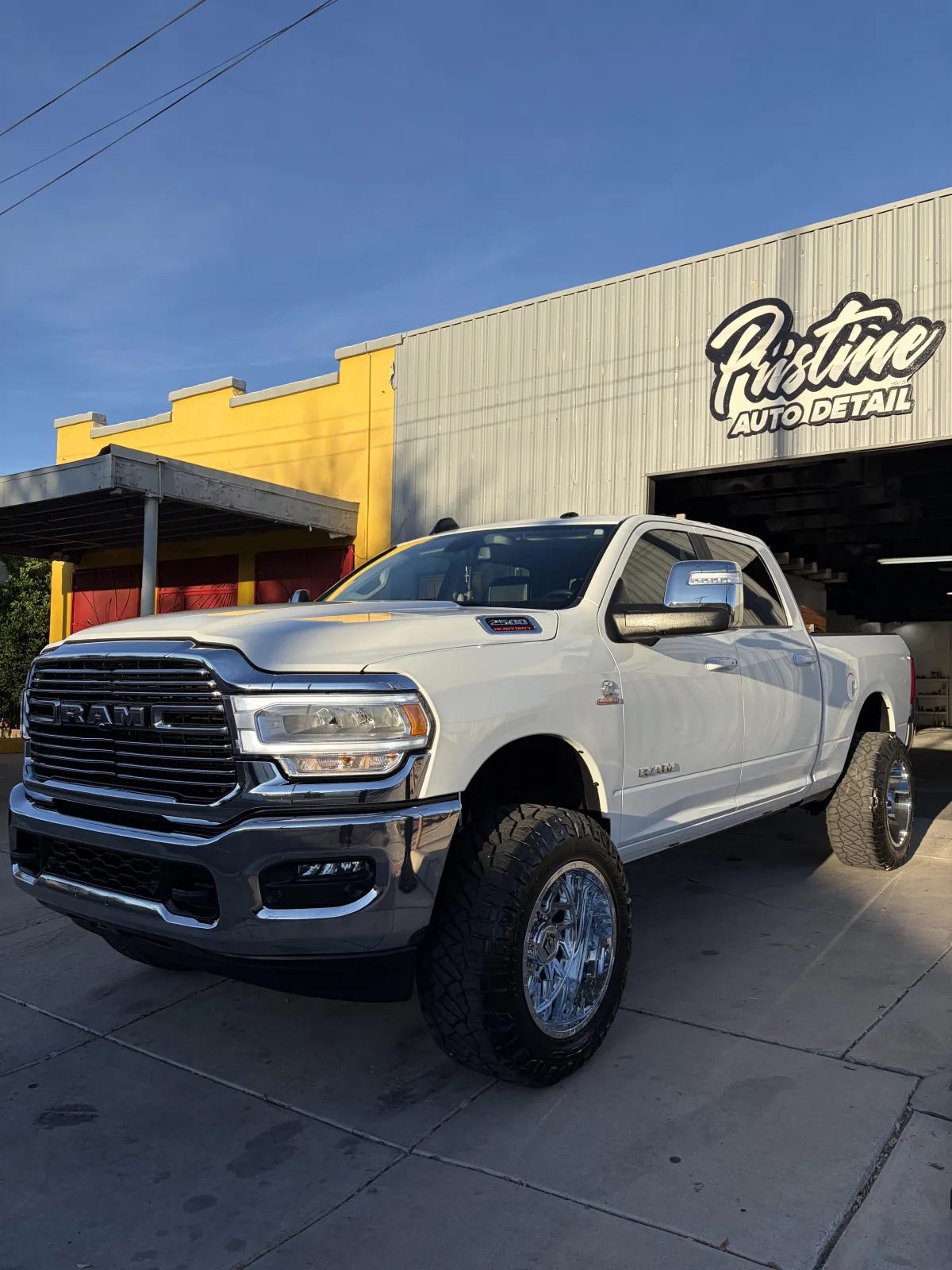
How the Desert Destroys Your Car's Paint
How the Desert Destroys Your Car's Paint — and How to Stop It
By Pristine Auto Detail | Auto Detailing Tips | Tucson, AZ
If you've lived in Tucson for any amount of time, you already know the desert doesn't go easy on anything. Your skin, your home, your landscaping — the climate here is relentless. Your car's paint is no different.
What most Tucson drivers don't realize is just how many different ways the desert is actively working against their vehicle's finish at any given moment. It's not just the heat. It's not just the sun. It's a combination of environmental factors that work together to break down your clear coat, fade your color, and age your vehicle years faster than the same car would age somewhere like Seattle or Chicago.
The good news is that understanding what's happening to your paint is the first step toward stopping it. In this guide we'll walk through every way the Tucson environment attacks your vehicle's finish — and exactly what you can do to protect it.
The Desert Is Not Normal Car Country
Before we get into the specifics, it's worth putting Tucson's climate in context. Most car care advice you'll read online is written for average conditions — moderate temperatures, regular rainfall, occasional sun. Tucson is not that.
Tucson averages 286 sunny days per year. Summer temperatures regularly exceed 100 degrees Fahrenheit and road surface temperatures can hit 150 to 170 degrees on a hot July afternoon. The UV index here regularly reaches extreme levels — the same classification used to describe conditions in equatorial regions. Annual rainfall is low and when it does come, it comes fast and hard during monsoon season, carrying everything the desert has been collecting for months right onto your paint.
This is not a climate your car was designed for by default. It's a climate that requires intentional protection if you want your vehicle to look good and hold its value over time.
The Six Ways Tucson's Desert Destroys Your Paint
1. Ultraviolet Radiation — The Silent Killer of Clear Coat
UV radiation is the single biggest threat to your vehicle's paint in Tucson, and it works slowly enough that most people don't notice the damage until it's already significant.
Your car's paint has four layers — primer, base coat (the color), clear coat, and whatever protection product sits on top. The clear coat is what gives your paint its gloss and depth, and it's what UV rays attack first. UV radiation breaks down the molecular bonds in the clear coat through a process called photo-oxidation. Over time this causes the clear coat to become thin, hazy, and eventually to peel.
Once the clear coat begins failing, the color layer underneath becomes directly exposed to the elements. This is when you see paint that looks chalky, faded, and dull — the kind of finish you see on older vehicles that have spent years unprotected in the Arizona sun. At that stage, the damage is severe and expensive to address properly.
In Tucson, this process happens faster than almost anywhere else in the country. A vehicle that might maintain its clear coat for 10 years in a moderate climate can show significant UV damage in 4 to 5 years here without proper protection.
What stops it: A quality UV-resistant paint protection product. Wax provides minimal UV protection and needs to be reapplied every 4 to 6 weeks in Arizona's heat. A paint sealant lasts longer but still requires regular reapplication. A professional ceramic coating provides genuine long-term UV resistance and is by far the most effective solution for Tucson's sun intensity.
2. Extreme Heat — Accelerating Every Other Problem
Heat doesn't just make the UV damage worse — it accelerates every other form of paint deterioration happening to your vehicle simultaneously.
At 110 degrees ambient temperature, the surface of your car's paint can reach temperatures that cause protection products like wax to literally melt and slide off the vehicle. This means the UV protection you applied two weeks ago may already be gone on a hot Tucson afternoon, leaving your clear coat exposed.
Heat also causes your vehicle's metal panels to expand and contract repeatedly through daily temperature cycles. Parking in the sun all day and then in a cooler garage at night puts your paint through constant thermal stress. Over time this contributes to micro-cracking in the clear coat that allows contaminants to penetrate more deeply.
Inside the vehicle, extreme heat is equally destructive. Dashboard surfaces crack and warp. Leather dries out, cracks, and fades. Plastics become brittle. Interior adhesives weaken. A vehicle regularly left in the Tucson sun without interior protection ages its cabin surfaces dramatically faster than a vehicle that's shaded or properly treated.
What stops it: For the exterior, a ceramic coating that withstands high temperatures and maintains its UV-blocking properties even in extreme heat is the most effective solution. For the interior, regular conditioning of leather and vinyl surfaces combined with a windshield sunshade whenever possible significantly slows heat-related interior deterioration.
3. Haboobs and Dust Storms — Microscopic Sandblasting
Tucson's dust storms — haboobs — are one of the most underappreciated sources of paint damage in the desert southwest. When a wall of dust rolls through and your vehicle is sitting outside, what's happening to your paint is essentially a large-scale microscopic sandblasting event.
Dust particles in a haboob are not just dirt — they include fine silica particles, mineral fragments, and other abrasive material that travels at significant wind speed. When this material makes contact with your paint at velocity, it creates micro-scratches across the clear coat surface. A single dust storm can leave thousands of fine scratches across every exposed panel of your vehicle.
These scratches are often not immediately obvious — they show up as a dull haze across the paint, most visible in direct sunlight. Over time, repeated dust storm exposure without proper treatment creates the swirling, hazy finish that makes many Arizona vehicles look far older than they are.
The problem compounds when people wipe or rinse their vehicle after a dust storm without proper washing technique. Dragging a dry cloth across a dust-covered panel, or rinsing with a low-pressure hose and then wiping, grinds the abrasive particles further into the clear coat. Improper post-storm cleanup can cause as much damage as the storm itself.
What stops it: A ceramic coating provides a harder surface layer that is significantly more resistant to micro-scratching from dust and debris than bare clear coat or wax-protected paint. After any dust storm, a proper contactless pre-rinse with high pressure before any cloth touches the vehicle is essential to prevent grinding particles into the paint during washing.
4. Monsoon Season — Acid Rain, Mineral Deposits, and Contamination
Tucson's monsoon season runs roughly from late June through September, and while the rain is welcome after months of dry heat, it creates its own set of paint problems that many drivers don't anticipate.
The first problem is what the rain picks up on the way down. Desert air carries significant amounts of dust, pollen, industrial fallout, and other airborne contamination. When rain falls through this atmosphere it collects these particles and deposits them directly onto your paint. This is sometimes called acid rain — not always in the industrial sense, but in the sense that the contaminated water that lands on your vehicle is far from pure and leaves residue behind when it evaporates.
The second problem is water spots. Tucson's water supply is mineral-rich, and monsoon rain that evaporates on your paint leaves mineral deposits behind. In the intense heat, this evaporation happens quickly, and the minerals etch into the clear coat surface. Light water spots can be polished out. Severe or long-standing water etching requires more aggressive correction and in extreme cases can permanently scar the clear coat.
The third problem is what the rain washes off the road and onto your vehicle's lower panels. Months of accumulated dust, oil, rubber deposits, and road contamination get stirred up by rain and deposited on your paint, wheels, and undercarriage.
What stops it: The best defense against monsoon water spotting is a hydrophobic surface — one that causes water to bead up and roll off rather than sheet across the paint and sit there evaporating. A quality ceramic coating creates exactly this surface. Post-monsoon washing with a proper technique — ideally within 24 hours of a rain event — also significantly reduces the chance of mineral deposits having time to etch into the clear coat.
5. Caliche and Road Debris — What the Desert Roads Throw at You
Tucson's roads, particularly in outlying areas and on unpaved surfaces, carry caliche — a hardened calcium carbonate deposit common in desert soils. When caliche dust and debris gets kicked up by traffic and lands on your vehicle, it bonds to the paint surface and is significantly harder to remove than ordinary dirt.
Beyond caliche, desert roads also throw rock chips at a high rate. Gravel roads, construction zones, and highways with loose aggregate are common throughout the Tucson area. Rock chips that penetrate the clear coat and reach the base coat or metal create entry points for rust — a problem that seems counterintuitive in a dry desert climate but is very real once paint protection is compromised and the vehicle encounters monsoon moisture.
What stops it: Paint Protection Film — PPF — is the most effective defense against rock chips and road debris. PPF is a clear urethane film applied directly to the paint surface that physically absorbs impacts that would otherwise chip or scratch your paint. For vehicles regularly driven on Tucson's outer roads and highways, PPF on the front end is one of the most practical investments available. A ceramic coating adds an additional layer of chemical resistance on top of PPF for maximum protection.
6. Bird Droppings and Tree Sap — Accelerated by Arizona Heat
Bird droppings and tree sap are paint hazards everywhere, but in Tucson's heat they become urgent in a way they aren't in cooler climates.
Bird droppings are slightly acidic and contain uric acid that etches into clear coat. In moderate temperatures this process happens over days and gives you time to address it. In Tucson's summer heat, the same droppings can etch into your clear coat in a matter of hours as the heat accelerates the chemical reaction. A dropping that falls on your vehicle in the morning parking lot can cause visible etching by afternoon if not removed.
Tree sap presents a similar issue. The heat causes sap to liquify and spread across the paint surface, then harden into a bond that becomes increasingly difficult to remove without risking scratches. The longer it sits in the heat, the worse the removal process becomes.
What stops it: Removing bird droppings and tree sap promptly is essential in Tucson — not eventually, but the same day if at all possible. A ceramic coating provides a chemical-resistant surface that makes removal significantly easier and reduces the rate at which etching occurs, giving you more time to respond before damage sets in.
The Complete Protection Strategy for Tucson Vehicles
Now that you understand what the desert is doing to your paint, here's the complete approach to stopping it.
Step 1 — Start with paint correction if needed. If your vehicle already has swirl marks, water etching, UV haze, or oxidation, those need to be addressed before any protection is applied. Sealing damage under a coating preserves it permanently. A single-stage or multi-stage paint correction restores the clear coat to its best possible condition before protection goes on.
Step 2 — Apply a professional ceramic coating. For Tucson vehicles, ceramic coating is not a luxury — it's the most practical long-term solution to every environmental threat this climate presents. A quality professional ceramic coating provides genuine UV resistance, creates a hydrophobic surface that repels water and contaminants, adds chemical resistance against bird droppings and road chemicals, and produces a harder surface that resists micro-scratching from dust and debris. It lasts years, not weeks.
Step 3 — Consider Paint Protection Film on high-impact areas. For the front bumper, hood leading edge, fenders, and mirrors — the surfaces that take the most rock chip and road debris impact — PPF provides physical protection that a coating alone cannot. Combining PPF with ceramic coating gives you both physical impact protection and chemical/UV resistance.
Step 4 — Maintain properly between professional services. Wash every 1 to 2 weeks using the two-bucket method or a foam cannon. Never use an automatic brush car wash — the brushes create swirl marks that compound with dust storm damage over time. After dust storms, always pre-rinse with high pressure before touching the paint. Apply a ceramic maintenance spray every few months to keep your coating performing at its best.
Step 5 — Don't neglect the interior. Condition leather and vinyl surfaces every 2 to 3 months to prevent cracking and fading. Use a windshield sunshade whenever parked outside. Consider a UV-resistant interior protectant on dashboard and door panel surfaces. The interior of a Tucson vehicle deteriorates just as fast as the exterior without proper care.
How Often Should Tucson Vehicles Be Professionally Detailed?
Given everything the desert throws at your vehicle, here's the schedule we recommend for Tucson drivers:
Wash: Every 1 to 2 weeks. Do not let dust storm residue, bird droppings, or monsoon deposits sit on your paint.
Full exterior detail: Every 3 to 4 months for unprotected vehicles. Every 6 months for ceramic-coated vehicles.
Full interior detail: Every 3 to 4 months. Heat accelerates interior deterioration significantly.
Wax or sealant (non-coated vehicles): Every 4 to 6 weeks. Arizona heat destroys conventional wax faster than any other climate in the country.
Ceramic coating maintenance: Once a year for a professional decontamination and coating inspection service.
Paint correction: As needed when UV haze, water etching, or swirl mark buildup reaches a visible level — typically every 2 to 3 years on uncoated vehicles driven regularly in Tucson conditions.
Frequently Asked Questions
Is ceramic coating worth it in Tucson specifically? More so here than almost anywhere in the country. Tucson's UV intensity, extreme heat, dust storms, and monsoon water spotting create the exact conditions that ceramic coating is designed to address. A quality professional coating applied to a properly corrected paint surface will protect your vehicle's finish for years and dramatically reduce your maintenance burden.
How long does wax last in Arizona heat? Significantly less than the manufacturer's claims, which are almost always based on moderate climate testing. In Tucson's summer heat, conventional carnauba wax can break down in as little as 3 to 4 weeks. Synthetic sealants last longer but still require reapplication every 6 to 8 weeks in Arizona conditions. This is one of the primary reasons ceramic coating is so practical for desert vehicles — you stop the cycle of constant reapplication.
Can dust storms permanently damage my paint? Yes, over time. A single dust storm won't destroy your paint, but repeated exposure without protection creates cumulative micro-scratch damage that dulls the finish and eventually requires paint correction to reverse. A ceramic coating's harder surface layer significantly reduces this cumulative damage with every storm.
What should I do immediately after a haboob? Do not wipe the vehicle dry. Do not run it through a brush car wash. Rinse the vehicle thoroughly with high pressure — a hose at full pressure or a pressure washer — to remove loose abrasive particles before any cloth or mitt touches the paint. Then wash properly with the two-bucket method. This single habit prevents a significant amount of the swirl mark damage that Tucson vehicles accumulate from dust storms.
What about the inside of my car — does the desert damage that too? Significantly. Dashboard cracking, leather fading and drying, brittle plastics, and interior odor development all happen faster in Tucson's heat than in moderate climates. Regular conditioning of leather and vinyl, UV protectant on dash surfaces, and consistent interior detailing are all important parts of desert vehicle care.
How do I know if my paint already has UV damage? Look at your paint in direct sunlight. If it looks hazy, lacks depth, appears slightly chalky or milky rather than clear and glossy, or if the color looks faded compared to shaded areas of the same panel — your clear coat has UV damage. Light to moderate damage can be addressed with paint correction. Severe damage with clear coat peeling requires more extensive treatment.
Protect Your Paint Before the Desert Does More Damage
Every day your vehicle sits unprotected in Tucson's sun, heat, and dust is another day the desert is working against your paint. The damage is gradual, which makes it easy to ignore until it's become a significant and expensive problem.
Pristine Auto Detail specializes in protecting vehicles from exactly the conditions Tucson drivers deal with every day. Whether your paint needs correction work to address existing damage, a ceramic coating to defend against future damage, or a complete detail to restore it inside and out — we have the service and the expertise to get it done right.
📞 Call or text us: (520) 505-9453 🌐 pristineautomotivedetailing.com 📍 Serving Tucson, AZ
Don't wait until the damage is done. Contact Pristine Auto Detail today and let's talk about the right protection plan for your vehicle.
Pristine Auto Detail | Tucson AZ Auto Detailing | Ceramic Coating Tucson | Paint Protection Tucson | Desert Car Care Arizona | Paint Correction Tucson AZ
